
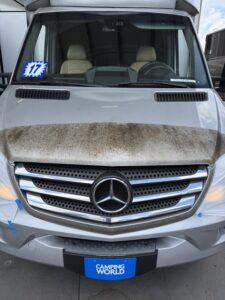
How Road Debris Damages Your RV Front Cap and What You Can Do About It
The front cap of your RV takes more abuse than any other exterior surface.
Every mile traveled exposes it to rocks, gravel, insects, sand, road salt, and countless other hazards. While most RV owners focus on engine maintenance, tires, and interior systems, many overlook the area that absorbs the majority of road impact damage.
Over time, these small impacts can lead to expensive cosmetic repairs, paint damage, fading, and even permanent surface deterioration.
Understanding what causes front cap damage—and how to prevent it—can help preserve your RV’s appearance and value for years to come.
✅ Why the Front Cap Takes the Most Damage
Unlike the sides or rear of the RV, the front cap constantly faces oncoming debris while traveling at highway speeds.
Even a tiny rock becomes a significant projectile when combined with the speed of traffic.
Common sources of damage include:
✅ Loose gravel
✅ Construction debris
✅ Tire-thrown rocks
✅ Sand and dirt
✅ Bug impacts
✅ Road salt and chemicals
Every trip contributes a little more wear to the front of the coach.
✅ Small Chips Often Become Bigger Problems
Many owners first notice damage as tiny paint chips.
At first glance, these imperfections seem minor. However, once the protective surface is compromised, additional issues can develop.
Over time, chips may lead to:
- Paint deterioration
- Surface staining
- Oxidation
- Water intrusion
- More noticeable cosmetic damage
Addressing minor damage early is often much easier than waiting until widespread deterioration occurs.
✅ Bug Damage Is More Serious Than Most People Realize
One of the most overlooked threats to RV finishes is insect impact.
Bugs contain acidic compounds that can damage painted and vinyl surfaces when left unattended.
Florida travelers are particularly familiar with:
- Lovebugs
- Mosquito swarms
- Gnats
- Beetles
- Flying insects common near wetlands
When bugs remain on the surface for extended periods, staining and surface etching can occur.
This is especially true during hot summer months.
✅ UV Exposure Makes Existing Damage Worse
Florida’s intense sunlight doesn’t necessarily cause road damage, but it accelerates the deterioration of damaged surfaces.
Once paint has been chipped or scratched, UV rays can further weaken exposed materials.
This combination of impact damage and UV exposure often leads to:
- Fading
- Oxidation
- Clear coat failure
- Uneven surface appearance
The longer damage remains untreated, the more noticeable it typically becomes.
✅ Common Signs Your Front Cap Needs Attention
Many RV owners become accustomed to gradual wear and fail to notice damage until it becomes extensive.
Warning signs include:
✅ Paint chips
✅ Surface pitting
✅ Dull appearance
✅ Bug staining
✅ Fading graphics
✅ Scratches
✅ Discoloration
A thorough inspection before and after travel can help identify problems early.
✅ Long-Distance Travelers Face Greater Risk
RV owners who frequently travel across multiple states often experience more front cap damage than seasonal users.
High-mileage travel increases exposure to:
- Interstate construction zones
- Gravel shoulders
- Desert dust
- Severe weather conditions
- Heavy truck traffic
The more time spent on the road, the more opportunities there are for debris-related damage.
✅ Why Traditional Wax Has Limitations
Many RV owners rely solely on wax for protection.
While wax can improve appearance and provide some environmental protection, it is not designed to stop physical impacts.
Wax cannot prevent:
- Rock chips
- Gravel strikes
- Surface abrasion
- Bug impact damage
It remains a valuable maintenance product, but it should not be viewed as impact protection.
✅ Modern Protection Solutions for RV Front Caps
Today’s RV owners have access to advanced protection options that were not widely available years ago.
Protective films can create a sacrificial barrier between the road and the RV’s finish.
Benefits may include protection from:
- Road debris
- Rock impacts
- Bug acids
- Surface abrasion
- UV exposure
Many RV owners choose to protect high-impact areas before visible damage begins rather than waiting for repairs to become necessary.
✅ Protection Is Usually Less Expensive Than Restoration
A common mistake is waiting until significant damage has already occurred.
Once paint, graphics, or surfaces are heavily damaged, restoration often becomes more complicated and costly.
Preventive protection helps preserve:
- Appearance
- Resale value
- Exterior finish
- Factory graphics
- Long-term maintenance budgets
For RV owners planning to keep their coach for years, protecting vulnerable areas early often delivers the best long-term results.
✅ Preserve Your RV Before Damage Starts
Every road trip exposes your RV to hazards that are impossible to avoid completely.
While you cannot eliminate road debris, you can reduce the impact it has on your investment.
Protecting the front cap before major wear occurs is one of the most effective ways to maintain your RV’s appearance, reduce future repair costs, and keep your motorhome looking its best wherever the road takes you.
Frequently Asked Questions
✅ What is an RV front cap?
The front cap is the forward-most exterior section of a motorhome that faces oncoming traffic and absorbs the majority of road impacts.
✅ What causes rock chips on RVs?
Rock chips are typically caused by gravel, loose road debris, construction materials, and stones thrown by passing vehicles.
✅ Can bug splatter damage RV paint?
Yes. Insects can leave acidic residue that may stain or etch paint and graphics if not cleaned promptly.
✅ Does wax protect against rock chips?
No. Wax helps with appearance and environmental protection but does not prevent physical impact damage.
✅ What areas of an RV should be protected first?
The front cap, leading edges, mirrors, and other high-impact surfaces generally experience the most road debris exposure.